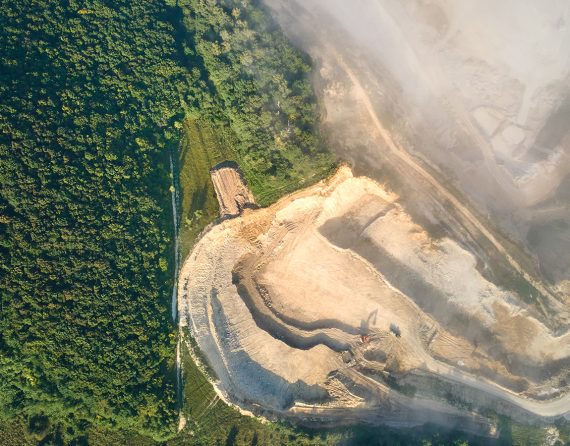
Environmental considerations in mining have shifted from being peripheral concerns to central elements in investment decisions and risk management.
Environmental considerations in mining have shifted from being peripheral concerns to central elements in investment decisions and risk management. A decade ago, mine closure and waste management were afterthoughts; today, they have binding legal requirements that can determine a project’s viability. Across the industry, reported closure liabilities have increased by 63% in just four years, reaching approximately $45 billion [13]. For example, Rio Tinto’s decommissioned Ranger uranium mine in Australia, rehabilitation costs have exceeded A$2.2 billion (≈$1.5 billion), requiring the company to inject new capital to cover cleanup [7].
This paradigm shift is reshaping both regulatory frameworks and arbitration trends. Governments and communities are demanding enforceable closure plans, financial guarantees, and long-term waste management solutions. For mining companies, this means higher costs and increased risk disputes over responsibility for environmental damage. In the Middle East and North Africa (MENA)—notably Egypt, Saudi Arabia, and the UAE—laws and contracts are evolving to align with sustainability goals. Meanwhile, Africa, Latin America, and Asia provide cautionary parallels: disputes over tailings dam failures, rehabilitation funds, and legacy liabilities are becoming more common. Arbitration tribunals are increasingly called upon to balance environmental imperatives with investor protections under international law.
MENA’s New Focus on Closure and Sustainability
Egypt – Strengthening Closure Frameworks Post-Sukari
Egypt’s Sukari gold mine has influenced the country to strengthen its approach to mine closure. Under its revised exploitation contracts, companies must now submit comprehensive closure plans aligned with international standards, update these plans every five years, and provide closure bonds sufficient to cover the full rehabilitation cost [1]. These funds are held by the Egyptian Mineral Resources Authority (EMRA) and are only released after inspections confirm rehabilitation is complete [1]. Regulators also mandate post-closure monitoring committees and require operators to periodically revalue closure liabilities [1].
The Sukari saga highlights the risk of vague closure obligations. By legally binding investors to “stabilize the environmental and social state” at closure, Egypt, Egypt has clarified that mine closure is both a contractual and financial responsibility. Failure to comply results in forfeiture of closure bonds, reducing the risk that the state will bear the cost of cleanup and placing responsibility squarely on the operator.
Saudi Arabia – Vision 2030 and Rehabilitation Enforcement
Saudi Arabia’s Mining Investment Law of 2020 incorporates sustainability as a core principle, with about one-third of its provisions dedicated to environmental obligations.[14]. License applicants must submit environmental impact assessments, rehabilitation programs, and financial guarantees covering closure costs before operations begin [2]. These guarantees must be updated every five years and reviewed at each license renewal [2]. Operators are also required to submit annual compliance reports, linking license validity to ongoing rehabilitation obligations [2].
The Kingdom has shown a willingness i to enforce these rules. Illegal or non-compliant mining is subject to strict penalties, while state-owned Ma’aden has set the tone with large-scale sustainability initiatives, from planting 3 million trees at Al-Jalamid phosphate mine to installing solar power at multiple sites [3]. Rehabilitation bonds are now a baseline expectation. Liability for closure costs rests firmly with the investor, ensuring that Saudi Arabia’s Vision 2030 strategy marries mining growth with environmental responsibility. For foreign investors, this means contracts must include explicit stability clauses and budget allocations for long-term environmental compliance.
United Arab Emirates – Investor-Centric but ESG-Driven
While not a major producer, the UAE has used its sustainability agenda to influence mining practices domestically and abroad. Domestically, Federal Law No. 12 of 2018 on Integrated Waste Management creates a comprehensive waste framework, reinforced by Dubai’s 2024 Waste Management Law, which mandates segregation, recycling, and waste-to-energy processes [4][15]. The UAE Green Agenda 2030 aims for a 75% waste recovery rate, embedding circular economy principles into national policy [15].
Mining and quarrying projects—whether domestic or financed abroad by Emirati investors—are now expected to integrate waste minimization and recycling commitments. Non-compliance can result in significant penalties, including fines up to AED 10 million and potential criminal liability [4]. The UAE’s sovereign funds, such as Mubadala, have begun to incorporate ESG due diligence into mining investments abroad, reflecting the country’s Net Zero 2050 commitment and its role as COP28 host. As a result, UAE-linked mining projects must meet international best practices on closure and waste, or risk reputational consequences.
Global Parallels in Waste Liability and Closure
Other regions offer instructive parallels:
- Africa: In South Africa, rehabilitation funds to government on (≈$210 million) remain unused due to regulatory gridlock, trapping companies like Sibanye-Stillwater in costly limbo even after mine closures [5].In Zamba, the government s seizure of Konkola Copper Mines (KCM) from Vedanta in 2019, citing environmental breaches, led to a lengthy arbitration that was only settled in 2023 with Vedanta committing $1.2 billion to new investments and remediation [6].
- Latin America: Peru’s La Oroya smelter dispute illustrates the ESG dilemma: Peru faces arbitration by Renco Group for tightening cleanup standards, while the Inter-American Court condemned Peru for failing to protect citizens from toxic emissions [8]. In Colombia, the Eco Oro case highlighted how protected-ecosystem designations can frustrate investor expectations, with tribunals recognizing environmental legitimacy but scrutinizing their implementation [17].
- Asia: Mongolia’s cancellation of Khan Resources’ uranium license resulted in a $100 million arbitration award for expropriation [18]. The Philippines’ 2017 mass closure of mines over environmental violations demonstrated how regulators can abruptly reshape the sector [9]. Across Asia, new ESG rules are testing stabilization commitments, with tribunals balancing investor protections against states’ right to regulate.
These parallels underscore global pattern: closure liabilities and waste management failures are increasingly at the center of disputes.
Emerging Dispute Themes
Mine Closure Obligations
Governments are requiring detailed closure plans backed by financial guarantees, as seen in Egypt and Saudi Arabia [1][2]. Disputes often arise when funds are insufficient or when responsibilities are unclear during asset transfers. Courts in South Africa have ruled that water treatment obligations can extend beyond closure, creating ongoing liabilities [5].
Waste and Tailings Liability
Tailings dam failures, such as Brazil’s Brumadinho disaster, have shown how catastrophic waste mismanagement can lead to criminal prosecutions and multibillion-dollar claims [11]. Compliance with the Global Industry Standard on Tailings Management (2020) is now a key benchmark for assessing negligence.
Liability Transfers in M&A
The transfer of environmental obligations during mining asset sales is a frequent source of disputes. Zambia’s KCM illustrates how legacy liabilities can disrupt privatizations and lead to expropriation [6]. In South Africa, Anglo American has faced claims for contamination years after divesting assets, raising questions about “chain of custody” for environmental obligations.
ESG and Circular Economy Pressures
ESG-linked financing, sustainability-linked bonds, and circular economy initiatives introduce new contractual dimensions. Investors may face penalties for missing ESG targets, or disputes over liability in waste-to-resource projects. Communities are also pursuing human rights–based claims tied to environmental harm, such as the Kabwe lead poisoning case in Zambia against Anglo American [12].
Arbitration as a Forum for Waste Disputes
International arbitration is increasingly used to resolve mining-related disputes. Tribunals have awarded compensation to investors where environmental measures were used as a pretext for protectionism (e.g. Bear Creek v. Peru) but also upheld states’ right to regulate when measures were bona fide, as in Cortec v. Kenya [11]. New treaties, such as Morocco–Nigeria’s BIT, now include explicit environmental obligations for investors, signaling that sustainability is part of the bargain.
For companies, this means structuring investments through treaty-friendly jurisdictions, embedding stabilization and environmental allocation clauses in contracts, and maintaining strong ESG practices to avoid undermining claims. For states, it means designing environmental measures that are proportionate, transparent, and consistent with international standards.
Conclusion: Mining with a Conscience
Circular economy principles and waste liabilities are no longer secondary—they define mining’s future. in Egypt, Saudi Arabia, and the UAE, the lesson is clear: closure and waste management obligations are now central to investment frameworks, enforced through bonds, rehabilitation programs, and sustainability regulations [1][2][4]. Globally, failure to meet these obligations can result in expropriation, arbitration, and reputational damage.
The mining companies that succeed will be those that prioritize closure planning, invest in waste reprocessing, and negotiate contracts that anticipate ESG evolution. By doing so, they can convert liabilities into opportunities and avoid costly disputes. Arbitration will continue to play a pivotal role, but the best strategy remains prevention: building sustainability into the DNA of mining projects. In today’s landscape, a mine is only truly profitable if it can also be responsibly closed.