Introduction
The Middle East is home to some of the world’s largest and most ambitious construction programs. From Saudi Arabia’s Vision 2030 giga-projects to Egypt’s new administrative capital and the UAE’s expanding infrastructure network, regional development is advancing at an unprecedented scale. Yet the sheer scale, complexity, and cross-border nature of these projects have also produced a surge in disputes involving contractors, investors, and government entities.
At the heart of these disputes lies a critical question: how do Arab legal systems interpret and apply construction and contractual principles in high-stakes cases? The answer often requires the insight of a qualified legal expert witness with authority on Arab laws. This article explores the central role that expert testimony plays in construction and mega-project disputes across the region, and how Dr. Karim A. Youssef and his team at Youssef + Partners provide that expertise.
1. The Middle East Construction Landscape
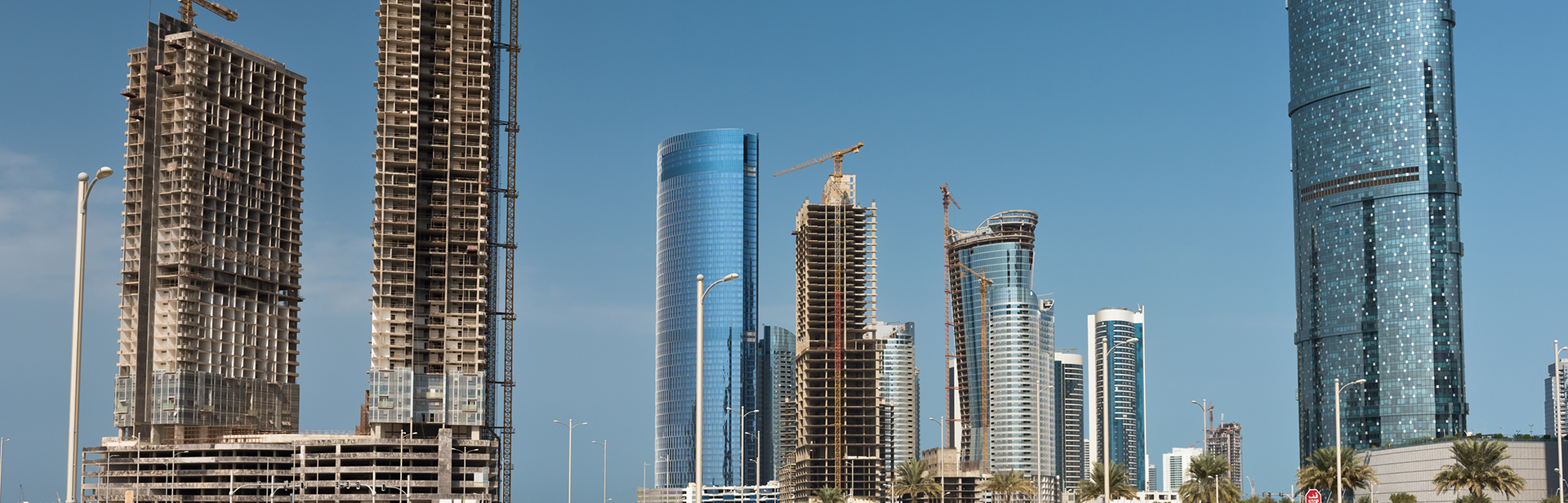
The region’s construction sector has entered a new phase defined by multi-billion-dollar infrastructure programs, cross-jurisdictional contracts, and hybrid financing models. Projects such as NEOM, the Red Sea Development, and Dubai’s sustainable city expansions illustrate a shared ambition to transform economies through large-scale urbanization.
However, this wave of development is also marked by complex risks:
- Multiple contractors and subcontractors operating under different legal systems.
- Varied governing-law clauses combining local Arab laws with international standards such as FIDIC.
- Heavy regulatory oversight, particularly when sovereign or quasi-governmental entities are involved.
- Disruptions caused by supply-chain volatility, labor shortages, or force-majeure events.
These risks increase the likelihood of disputes that demand deep understanding of local legal frameworks and their interplay with international arbitration.
2. Common Legal Issues in Mega-Project Disputes
2.1 Contract Interpretation and Good Faith
Under most Arab civil-law systems, including those of Saudi Arabia, Egypt, and the UAE, contracts are governed by good faith. This principle extends beyond written terms to encompass implied duties of cooperation and fairness. When disputes arise over delay, variation, or termination, tribunals rely heavily on expert opinions to interpret how these duties operate under the relevant national law.
2.2 Delay, Disruption, and Compensation
Claims for delay and disruption are among the most contested issues in mega-projects. Under Arab laws, entitlement to extensions of time or additional payment depends on compliance with notice provisions and the evidentiary standard required by the governing law. A legal expert witness can clarify the burden of proof, applicable damages principles, and how courts or tribunals have interpreted similar claims in prior cases.
2.3 Public Policy and Sovereign Entities
Many construction projects in the Middle East involve state-owned entities, public entities or public infrastructure. Issues of public policy and sovereign immunity can therefore shape dispute outcomes. Expert testimony can clarify how local courts interpret public-policy exceptions and the resulting implication for enforcing foreign arbitral awards in jurisdictions such as Saudi Arabia, Kuwait, or Egypt.
2.4 Evidence, Documentation, and Procedural Nuance
Arab laws place strong emphasis on written evidence and procedural formality. In certain jurisdictions, oral testimony may be restricted or limited in weight unless supported by documentary proof. Understanding these evidentiary nuances is fundamental for counselling preparing claims or defenses. A legal expert witness guides international lawyers through these procedural differences, ensuring compliance and maximizing evidentiary value.
3. The Role of Expert Witness Testimony
Expert witness testimony serves as the bridge between local legal doctrine and international dispute resolution practice. The expert’s role typically includes:
3.1 Interpreting Local Law for International Tribunals
International tribunals often comprise arbitrators unfamiliar with the civil-law systems of the Middle East. To avoid misinterpretation, a credible expert witness is needed to explain the application of various principles in light of the relevant Arab law, such as the principles of contract, liability, and damages.
3.2 Establishing Legal Context for FIDIC and Contractual Clauses
Many construction contracts in the region adopt FIDIC models, adjusted for local legal requirements. Expert witnesses identify which clauses are enforceable, how risk allocation aligns with mandatory legal rules, and how local courts view concepts such as liquidated damages or termination for convenience.
3.3 Supporting and Testing Quantum and Technical Evidence
Legal experts complement technical experts by grounding their findings in the applicable law. For example, a delay-analysis expert may quantify disruption, while the legal expert explains whether compensation for that disruption is permissible under the governing law.
3.4 Strengthening Enforcement and Recognition
Expert testimony also plays a role after the award or judgment. When a party seeks enforcement of a foreign arbitral award in an Arab jurisdiction, an expert on local law can help demonstrate that enforcement aligns with national public policy, thereby reducing the risk of rejection.
4. The Strategic Value for Counsel and Corporates
For legal counsel representing multinational clients, expert witness testimony offers several strategic benefits:
- It provides a credible framework for presenting local law issues before foreign tribunals.
- It enhances persuasiveness by aligning legal reasoning with recognized national doctrine.
- It mitigates procedural risk by ensuring compliance with local evidentiary standards.
- It builds confidence for clients and investors facing disputes in unfamiliar jurisdictions.
Corporate legal teams also benefit by involving experts early in contract negotiation and risk management. Early involvement ensures that contract terms are enforceable under local law and that dispute-resolution clauses are appropriately drafted.
5. Why Instruct Dr. Karim A. Youssef as Your Legal Expert
Dr. Karim A. Youssef, J.S.D., is one of the region’s most prominent figures in international arbitration and expert witness testimony on Arab laws. Ranked by Chambers & Partners as a “Star Individual” and founder of a GAR 100 firm, Dr. Youssef brings exceptional depth of experience to construction and infrastructure disputes.
He has acted as legal expert on the laws of Saudi Arabia, the UAE, Qatar, Kuwait, Oman, Bahrain, and Egypt, providing opinions in over 184 international arbitrations and before courts in the UK, Dubai, and Kuwait. His opinions have been tested and accepted in high-profile disputes involving sovereign entities, multinational contractors, and major energy and infrastructure projects.
When engaged as an expert witness, Dr. Youssef delivers:
- Authoritative analysis of Arab legal systems and their application to construction contracts.
- Court-approved and tribunal-tested credibility in cross-examination settings.
- Insightful integration of legal opinion into broader case strategy.
- Bilingual clarity and cultural fluency essential for proceedings in both English and Arabic.
For parties facing mega-project disputes across the Middle East, instructing Dr. Karim A. Youssef ensures their position is supported by one of the most trusted and recognized experts in Arab law.
6. Illustrative Example: Regional Mega-Project Dispute
Consider a dispute involving a multinational contractor and a Gulf sovereign developer. The governing law is Qatari law, the seat of arbitration is London, and the project involves multiple subcontractors across GCC jurisdictions.
Dr. Youssef’s expert report analyzes how Qatari law interprets contractual notice requirements, the principle of good faith, and liquidated damages. His opinion clarifies for the tribunal that certain FIDIC provisions must be read in harmony with mandatory Qatari civil-law concepts. At the hearing, his cross-examined testimony provides persuasive guidance on how Qatari courts have treated similar claims, helping the tribunal reach a reasoned and enforceable award.
7. Conclusion
Construction and mega-project disputes in the Middle East require both legal rigor and practical insight. The interplay between international standards and Arab legal traditions demands more than technical expertise; it demands authoritative interpretation by a seasoned legal expert witness.
Engaging a court-approved expert on Arab laws such as Dr. Karim A. Youssef ensures that counsel and clients approach their disputes with the highest level of credibility, clarity, and strategic advantage. In a region where infrastructure projects continue to shape economies, expert testimony is no longer optional, it is a cornerstone of successful dispute resolution.