I. Industry Spotlight
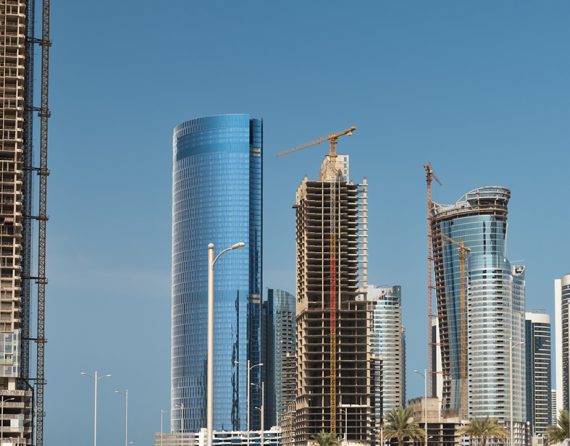
Saudi Arabia continues to dominate MENA’s construction market, awarding over $83 billion in projects in 2024, a 50% jump from the year before. Mega-projects include gas-fired power plants, HVDC converter stations, and two large-scale solar plants, all reflecting Vision 2030’s ambition to diversify energy and expand infrastructure. The UAE, with nearly $39 billion in awards, is strengthening its role as a regional hub through a mix of real estate, transport, and energy investments. Egypt, while facing macroeconomic challenges, retains strong momentum with a $55 billion sector projected to reach $82 billion by 2030, anchored by urban megaprojects like the New Administrative Capital, New Alamein, and Ras El Hekma’s $150 billion coastal city. Together, these developments showcase a region in transformation—rapid growth, ambitious vision, and equally significant risks of delay, disputes, and financial strain.

II. Industry Critical Legal Challenges
Contract Disputes and Scope Changes Frequent changes in project scope, aggressive schedules, and poorly coordinated joint ventures are driving an increase in disputes. On average, MENA projects suffer some of the world’s longest delays—83% time overruns compared to 68% globally—making contract variations the number one source of claims.
Payment Delays and Cash Flow Issues Late or withheld payments remain endemic, with Saudi Arabia seeing disputes in more than one-third of projects due to payment delays. While the government is introducing escrow-style accounts and standard contracts, contractors across the region still face liquidity crises that quickly escalate into arbitration or litigation.
Regulatory Compliance and Permitting Delays Each jurisdiction imposes evolving, often unpredictable building codes. The UAE enforces strict standards with lengthy approvals, while Saudi Arabia’s new codes create uncertainty for foreign investors. Egypt’s recent crackdown on informal construction has introduced fresh compliance burdens. For cross-border contractors, navigating multiple frameworks adds both cost and risk.
Labor Laws and Workforce Challenges Nationalization policies such as Saudization and Emiratization require companies to hire nationals even when skilled talent is limited. Labor shortages, combined with new legislation (like the UAE’s 2024 labor law), force contractors to balance compliance with project needs, creating bottlenecks in already strained timelines.
Financing and Economic Risks High interest rates, limited funding channels, and volatile currencies—particularly the Egyptian pound—make financing large-scale developments increasingly complex. Rising costs often lead to contract renegotiations or cancellations, forcing legal teams to intervene to preserve viability.
Supply Chain Disruptions and Force Majeure From pandemic shocks to geopolitical conflicts, supply disruptions have triggered widespread cost spikes and project delays. While force majeure clauses provide some protection, disputes over “who pays” remain common, underlining the need for robust risk-allocation frameworks.
Dispute Resolution and Enforcement Arbitration remain the preferred route, but enforcing awards is inconsistent. Although courts in the UAE and Bahrain uphold most awards, delays and procedural obstacles persist in Saudi Arabia and Egypt. Without predictable enforcement, cross-border disputes continue to pose major risks. In this article you’ll find more information on MENA Surge in Construction Disputes continue reading…

III. Regulatory & Legal Updates
Saudi Arabia
In July 2025, Saudi Arabia approved a landmark law allowing foreign individuals and companies to own real estate in designated zones such as Riyadh and Jeddah. This reform, part of Vision 2030, is expected to unlock international investment in housing and commercial projects, though regulatory safeguards remain to protect local interests.
Egypt
Egypt’s new Unified National Property ID Law assigns unique digital IDs to all properties, improving transparency and accelerating registrations. VAT on construction has been raised to the standard 14%, incentivizing compliance but increasing upfront costs. Meanwhile, the rollback of restrictive 2021 building laws has simplified permitting and allowed more flexible mixed-use development, a boon for affordable housing.
United Arab Emirates
The UAE’s Climate Change Law (effective May 2025) mandates construction and real estate companies to measure, report, and reduce emissions, aligning projects with the country’s 2050 net-zero goals. This adds a new layer of compliance for developers. Coupled with corporate tax and gradual liberalization of freehold property, the UAE is signaling a strong shift toward ESG-driven development.
Arbitration Updates
- CRCICA (Cairo) introduced new rules in 2024 allowing virtual hearings, expedited procedures, and third-party funding.
- SCCA (Saudi Arabia) saw a 30% jump in filings, with construction disputes making up nearly 40% of its caseload.
- Courts in the UAE confirmed that contracts citing the abolished DIFC-LCIA rules remain enforceable, giving reassurance to investors.
These reforms strengthen the region’s attractiveness as an arbitration hub.

IV. Enforcement & Compliance Risks
Egypt has rolled out AI-powered permit verification to tackle informal building, imposing fines up to EGP 5M and threatening demolition of unlicensed projects. Saudi Arabia requires all developers to use the Balady digital platform and real-time monitoring, with fines reaching SAR 500K for non-compliance. In Dubai and Abu Dhabi, sustainability audits and digital inspections are now mandatory, with potential suspension or loss of free zone licenses for violators.
V. Thought Leadership
Third-Party Funding: Opportunity and Risk Third-party funding (TPF) is rapidly reshaping construction arbitration, allowing contractors and investors to pursue high-value claims without tying up capital. But disclosure requirements in DIAC, SCCA, and ICSID now expose parties to cost liabilities if cases fail. TPF is a lifeline for many but requires careful structuring to avoid unintended risks.
Digital Construction: BIM, Smart Contracts, and AI Digital tools are streamlining projects but also creating novel disputes. Errors in shared BIM models spark liability debates; smart contracts automate payments but raise enforcement issues; and AI tools in arbitration are advancing from evidence review to drafting submissions. With DIAC and ADGM embracing digital case management, legal teams must be both tech-savvy and cautious about overreliance on emerging tools.
ESG and Sustainability in Construction with ESG regulations tightening, companies must adapt contracts and operations to meet environmental, social, and governance standards. From “greenwashing” claims to climate-compliance litigation, ESG is no longer an optional consideration but a frontline risk area for real estate and infrastructure players.
VI. Why Legal Expertise Matters
Construction disputes are rarely straightforward—they require legal knowledge fused with deep technical insight. Y+P’s team has advised on wastewater treatment plants, power stations, and cross-border urban megaprojects, ensuring contracts are watertight and disputes are strategically managed. From regulatory risk in Egypt’s currency reforms to precedent-setting settlements in Dubai, our experience proves that strong legal partnerships are critical in protecting billions in project value.

VII. Our Services
Y+P delivers specialized legal representation across the full spectrum of the construction and real estate industry, with a deep understanding of both technical intricacies and high-stakes disputes.
Key services include:
- Construction Contract Negotiation, Drafting & Review Carefully tailored contracts—from EPC and MEP agreements to infrastructure project documentation—to safeguard project clarity, risk allocation, and enforceability.
- Dispute Resolution & Arbitration Representing clients in international arbitrations and Egyptian courts over claims involving delays, variations, defects, and contract breaches.
- Real Estate Transactions Advising on acquisitions, dispositions, leasing agreements, and property development matters to ensure smooth and legally sound transactions.
- Regulatory & Compliance Advisory Guiding clients through complex regulatory landscapes—permits, environmental rules, and local building regulations—to maintain compliance and avoid legal roadblocks.
- Environmental Advisory Addressing environmental issues intrinsic to construction and real estate projects, from site contamination to ecological impact assessments.
This suite of services is supported by a broad project portfolio—ranging from tunnels, highways, airports, and wastewater plants to renewable energy developments and luxury hotel renovations—delivered across Cairo, Dubai, Doha, Abu Dhabi, Ras El Khaimah, and beyond

VIII. Practice Highlights
Y+P has represented leading construction clients in complex arbitrations across Egypt, Dubai, and Africa. Highlights include:
- Defending claims in Egypt’s largest wastewater treatment projects, involving decade-long disputes.
- Securing a landmark settlement in the “Steam Boilers” privatization unwind case.
- Acting for global contractors in disputes over Dubai’s electricity infrastructure and UAE’s mega-developments.
- Advising clients on FX-driven contract adjustments after Egypt’s currency floats in 2016 and 2022.
👉 Subscribe to our Industry Lens newsletter and stay ahead of industry challenges, legal updates, and arbitration case studies.
Stay Up to date with Next Month’s Focus: Mining & Quarrying Industry.