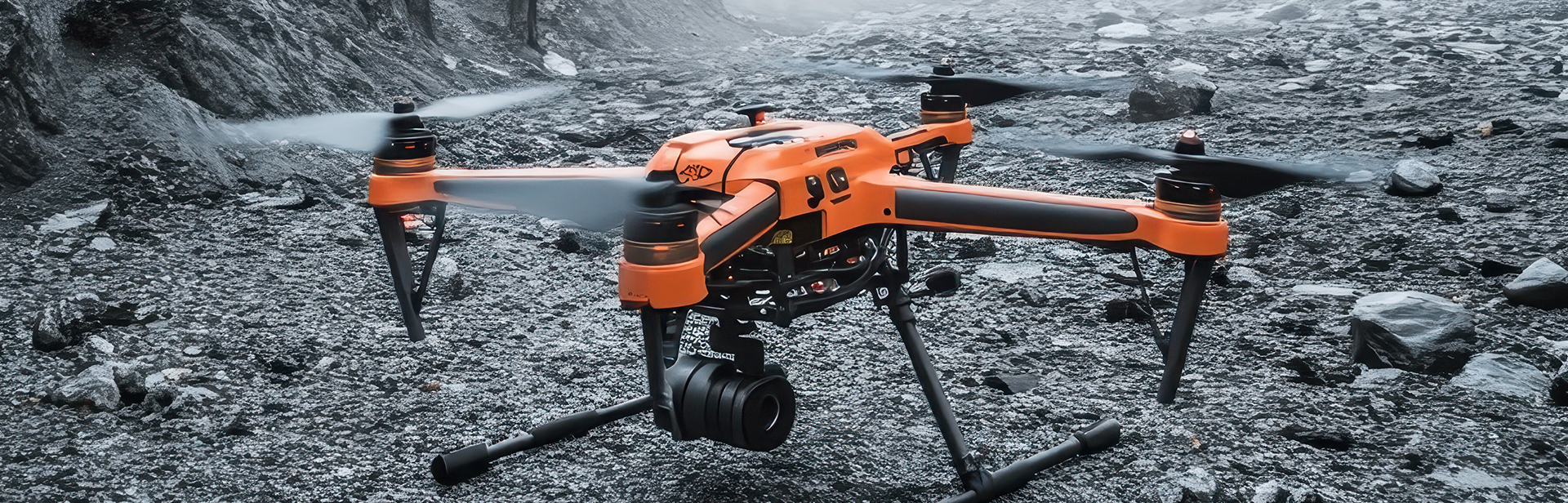
Mining in the digital age is undergoing both a renaissance and a reckoning. From the goldfields of Egypt to the copper belts of Zambia, the adoption of automation, artificial intelligence (AI) and digital platforms is reshaping the industry.
Mining in the digital age is undergoing both a renaissance and a reckoning. From the goldfields of Egypt to the copper belts of Zambia, the adoption of automation, artificial intelligence (AI) and digital platforms is reshaping the industry. Governments in the Middle East and North Africa (MENA)—notably Egypt, Saudi Arabia and the United Arab Emirates (UAE)—are advancing high-tech mining initiatives, while comparative developments in Africa, Latin America and Asia reveal common pressure points including contested IP ownership, cyber-resilience gaps and fragmented data regimes. These transformations enhance operational efficiencies, and ignite new disputes over intellectual property, cybersecurity and data governance. Arbitration and alternative dispute resolution (ADR) are evolving in parallel, providing a neutral framework for navigating these conflicts.
The Digital Transformation of Mining
The operational potential of digitalization is immense. McKinsey estimates digital innovation could generate $370 billion annually in added value by 2025 [3]. AI-driven exploration reduces time and cost, autonomous haul trucks improve safety, and IoT sensors optimize plant efficiency. MENA governments are seizing these opportunities. For instance, Saudi Arabia’s Vision 2030 identifies mining as a “third pillar” of diversification, and it invests heavily in robotics and automation within the field. Moreover, the UAE has embedded advanced analytics in the extractives sector, while Egyptian research teams and industry actors have introduced AI algorithms into gold and phosphate exploration.
Nevertheless, innovation brings contention. Key questions arise: Who owns a machine-learning model trained on state geological data? If cyberattacks disrupt autonomous systems, who bears liability? Can governments demand transparency without compromising corporate trade secrets? These tensions define the contours of today’s mining disputes.
Intellectual Property and AI Disputes
Modern mines depend on proprietary algorithms and AI systems. This makes intellectual property (IP) a frontline issue.
- Proprietary Algorithms and Trade Secrets: AI models underpin exploration, maintenance and production. If jointly trained on a government’s geological database and a private company’s know-how, ownership becomes contested. In the absence of contractual clarity, disputes escalate quickly.
- Automated Exploration Systems: In Egypt, digital “geologists” are deployed in the Eastern Desert. However, gaps in IP and data governance law create uncertainty over rights to AI-generated discoveries. Investors and states increasingly rely on arbitration when licensing or ownership disputes arise.
- Cross-Border Patent Races: Globally, AI patent filings are surging—China filed over 38,000 generative AI patents by 2023, many with mining applications [12]. This proliferation raises risks of infringement claims across borders, particularly in collaborative projects.
- Licensing and Joint Ventures: Saudi Arabia has inked partnerships to import automated mining technology. These arrangements are at risk of potential disputes if licensees overstep usage rights or licensors fear trade secrets are leaked. Arbitration’s inherently confidential nature serves as a key advantage here, enabling parties to resolve IP disputes discreetly [8].
Arbitral Institutions, such as Singapore International Arbitration Centre (SIAC), have responded by creating IP-specialist panels [8]. Surveys underscore the rationale behind these institutional strides: 60% of mining and energy companies identify arbitrator expertise as a decisive factor in selecting arbitration [9]. As disputes over algorithms and digital tools continue to proliferate, arbitration is increasingly emerging as the forum of choice.
Cybersecurity and Mines as Critical Infrastructure
Cybersecurity has emerged as a systemic risk. In July 2024, South Africa’s Sibanye-Stillwater suffered a cyberattack that disrupted global IT systems [2]. Africa currently faces the world’s highest cyberattack exposure, averaging 1,983 attacks per organization per week in Q1 2023, with Q1 2024 witnessing a further 20% increase [1].
In the MENA region, mining is now viewed as a critical part of national infrastructure. For example, Saudi Arabia has expanded its cybersecurity budget and regulation, while the UAE has faced some of the region’s most sustained cyber offensives [13]. However, vulnerabilities remain.
Legal disputes primarily cluster around four themes:
- Operational Liability: If a cyberattack halts deliveries, can miners claim force majeure? Cases like Transnet’s ransomware-induced force majeure in 2021 illustrate the uncertainty surrounding this issue [10].
- Sovereign Security: State-sponsored attacks raise sensitive questions of attribution, with implications for liability between private operators and host states.
- Contractual Obligations: Suppliers and JV partners are now bound by cybersecurity standards; breaches spark damage claims and arbitrations.
- Insurance Coverage: Insurers often deny coverage under war or terrorism exclusions, forcing companies into arbitration over cyber policies.
With African economies like South Africa and Egypt accounting for 35% of regional cyber incidents [1], and Gulf states also becoming frequent targets [13], disputes over mining-sector cyber resilience are set to grow.
Data Governance: Transparency vs. Confidentiality
Data is the new gold. Geological surveys, operational outputs and export figures are coveted by both governments and companies. This generates friction between sovereign demands for transparency and corporations’ need for confidentiality.
Governments are making strides towards increased transparency and openness. The Extractive Industries Transparency Initiative (EITI), which counts 50+ member states, mandates disclosure of payments and beneficial ownership [7]. African innovations—like Ghana’s beneficial ownership checks or Nigeria’s “Joining the Dots” tool—use open data to enforce accountability [7].
Nevertheless, companies guard data as a strategic asset. Data localization rules complicate matters: 36 of 54 African states now have data protection laws, but many lack harmonization [5][6]. This patchwork burdens cross-border miners and generates disputes when states claim non-compliance.
Furthermore, conflicts arise over contractual disclosure, sovereign access to operational data and commercial confidentiality in royalty/tax disputes. In some cases, arbitration panels are tasked with striking a balance between legitimate state oversight and the protection of trade secrets, often using protective orders. Increasingly, data is treated as a protected investment asset under Bilateral Investment Treaties (BITs), opening the door to treaty arbitration if states overreach [15].
Arbitration and ADR in Tech-Driven Disputes
Mining disputes have long dominated the International Centre for Settlement of Investment Disputes’ (ICSID) docket—28% of new cases in 2024 involved extractives [9]. Today, arbitration is extending to tech-related conflicts. Its strengths are clear:
- Expertise: Arbitrators with technical backgrounds can assess algorithms, cybersecurity, and data systems.
- Confidentiality: Arbitration protects sensitive trade secrets and security information [8].
- Flexibility: Emergency arbitrators can issue urgent orders, for example, halting misuse of IP.
- Enforceability: The New York Convention ensures awards are recognized and eznforced globally, which is critical for multi-jurisdictional ventures [8].
BITs also cover IP and technical know-how as protected assets, which renders treaty arbitration a viable path when state regulation undermines digital investments.
Forward-Looking Insights
The next generation of mining contracts must address tech risks directly by:
- Embedding clear IP and data ownership clauses in concessions, JVs, and service contracts.
- Updating force majeure definitions to explicitly cover cyber incidents.
- Requiring cybersecurity compliance frameworks with audit rights and liability allocations.
- Adopting multi-tier dispute resolution mechanisms (negotiation, mediation, arbitration) to prevent conflicts from escalating.
- Training legal teams to bridge mining law and digital literacy, ensuring disputes are handled holistically.
Youssef + Partners is uniquely positioned at this intersection. With a track record in both mining arbitration and technology-related disputes, the firm combines sector expertise with digital fluency [11]. Its team has advised on regulatory reforms, IP licensing conflicts, and cybersecurity compliance, offering clients both preventive strategies and dispute advocacy.
Conclusion
The digitalization of mining is transforming the operational efficiency of the industry, as well as the nature of its ensuing disputes and the manner they are resolved. Intellectual property, cybersecurity and data governance are now as central to mining as concessions and royalties. While these issues add layers of complexity, they can be managed through foresight: smarter contracts, robust cybersecurity and arbitration-ready frameworks.
As MENA and African mining embrace innovation, conflicts will inevitably arise. But arbitration and ADR provide effective tools to resolve these disputes without undermining investment or innovation. For investors, operators and governments, the imperative is clear: anticipate risks, negotiate protections, and partner with counsel equipped to navigate the intersection of digitalization and mining.
Sources
- Check Point Research – Global Cyberattacks (Q1 2023); PT Security – Africa 2024 cyber surge
- Reuters – “Platinum giant Sibanye hit by cyberattack” (2024)
- McKinsey – Digital Transformation in Mining (2025 outlook)
- McMillan LLP – Legal frontiers in mining and AI
- Lex Africa – Proliferation of African data laws (2023)
- Hogan Lovells – African data protection outlook (2023)
- EITI – Power of Open Data in African Mining (2025)
- IAM / Cravath – Arbitration in AI and IP disputes
- Hughes Hubbard – ICSID caseload statistics (2024); Clifford Chance – Arbitration trends in mining
- ABA – Enhancing Force Majeure for Cyber Threats (2023)
- Youssef + Partners – Firm expertise in mining and technology disputes
- Asia IP Law – China tops generative AI patent filings (2023)
- CybelAngel – Cyberattacks in the Middle East (2024)
- Latin America Advisora – Data sovereignty updates (2024)
- JIEL – Mining in investment arbitration: legitimate expectations and IP as protected assets