
For counsel in international arbitration, selecting the right Arab Law expert witness significantly shape how a tribunal understands the case. Arab Law evidence may be central to answer and guide tribunal regarding questions of contract validity, damages, public policy, enforcement, succession, or regulatory obligations.
Expert selection is often rushed, especially when the legal issue arises late in the proceeding. The stronger approach is to identify the legal question early, choose the right expert for that question, and provide precise instructions from the outset.
What “Arab Law” Actually Covers
There is no single body of law that can accurately be described as “Arab Law”.
Depending on the context, the term may refer to civil-code jurisdictions including those of the UAE, Kuwait, and Egypt; jurisdictions in which Sharia principles play a particularly significant role, such as Saudi Arabia; or free-zone frameworks such as the DIFC and ADGM. Any expert should therefore be anchored in the precise legal system, forum, and question that the dispute raises.
In the UAE, for example, civil and commercial issues may fall under federal legislation, such as the UAE Civil Transactions Law. In matters connected with Dubai; DIFC law may also be relevant, particularly where the parties have selected DIFC law, the arbitration is seated in the DIFC, or enforcement is sought before DIFC Courts. The DIFC Arbitration Law creates a distinct arbitration framework in Dubai’s financial free zone.
Saudi law requires different analysis. Under the Saudi Basic Law of Governance; legislation in the Kingdom is grounded in the Quran and the Sunna, which means that Expert evidence may therefore need to explain not only the applicable written rules, but also the Sharia-informed principles that shape their interpretation and application.
Hence, counsel should begin the expert witness selection with precision. The relevant question is not who can speak generally about “Arab law,” but who can assist the tribunal on the particular law, jurisdiction, and issue that must be decided.
How to Select Expert Witness Arab Law Arbitration Support
The choice of expert should be guided by four core considerations.
Relevant legal expertise: The expert should have direct experience with the specific Arab or GCC legal system in issue such as UAE, Saudi, Kuwaiti, Qatari, Omani, Bahraini, Egyptian, or another applicable legal system. Arab legal systems may share civil-law, Islamic law, or regional influences, but they differ significantly in legislation, court practice, commercial regulation, and judicial interpretation.
Subject-matter expertise: The expert should understand not only the relevant jurisdiction, but also the legal subject in dispute. For example, construction arbitration may require expertise in local construction law, public procurement, decennial liability, delay claims, or civil code principles. A banking or investment dispute may require a different specialist.
Independence and impartiality: The expert should provide objective assistance to the tribunal rather than advance the case of the party instructing them. Any conflicts of interest, prior relationships, or financial dependencies should be carefully assessed. The IBA Rules on the Taking of Evidence in International Arbitration set out procedures for expert evidence and evidentiary hearings, while the CIArb guideline on party-appointed and tribunal-appointed experts addresses independence and the content of expert reports.
Clear communication: The expert must be able to translate local legal principles into terms that arbitrators from common law, civil law, or mixed-law backgrounds can readily understand. A strong report is not measured by length, but by its ability to clarify the issue and make the analysis useful to the tribunal.
Proven arbitration experience: Counsel should consider whether the expert prior experience in giving evidence before tribunals or courts, including whether the expert has has previously prepared expert reports, given oral evidence, been cross-examined, participated in evidentiary hearings, or dealt with procedures such as expert conferencing or “hot-tubbing.” Arbitration experience is particularly important where the tribunal expects concise, issue-focused expert evidence.
Language capability: The expert should be able to work with the relevant legal materials in Arabic where necessary, including statutes, court judgments, regulations, ministerial decisions, and commentary. If the arbitration is conducted in English, the expert should also be able to explain Arabic legal concepts accurately in English.
For independence and expert evidence standards, counsel may also refer to the IBA Rules on the Taking of Evidence in International Arbitration and the CIArb Guideline on Party-Appointed and Tribunal-Appointed Expert Witnesses.
There are also certain factors to consider when assessing a proposed expert. Concerns may arise where the expert has appeared for opposing parties in comparable disputes without a convincing explanation of how independence is maintained, bases their views mainly on general legal commentary rather than current local practice, has been criticised by tribunals or courts, or lacks meaningful experience being tested through cross-examination..
For a GCC law expert appointment, counsel should also consider whether the legal issues can be addressed by a single GCC law expert or whether separate experts are needed. . Issues under UAE issue and Saudi law may require different legal analysis. Similarly, an agency-law dispute governed by Kuwaiti law may require a different expert profile than a matter involving recognition or enforcement in a Dubai free-zone.
Instructing and Preparing the Expert
A well-managed expert process starts with a narrow and precise mandate.
Counsel should avoid framing the expert’s task in broad terms. A general question such as “What does Arab law say about termination?” is unlikely to produce a useful opinion. The instruction should instead identify the applicable legal system, the specific act or issue to be assessed, and the consequence that matters for the case. For instance, in a UAE-law dispute, the question may be “Under UAE law, was the notice valid, and what consequences follow if termination was ineffective?”.
The expert should receive the documents needed to answer the question, not the entire record by default. It is usually unnecessary, and sometimes counterproductive, to provide the entire record automatically. The materials should be selected by reference to the issues the expert has been asked to address. These materials may include the contract, amendments, relevant correspondence, pleadings, governing law provisions, authority documents, and relevant procedural orders.
The expert’s independence must also be protected throughout the proceedings. Although the expert should understand the factual and procedural context, they should not be treated as part of the legal team or drawn into advocacy strategy. In court-connected proceedings, rules such as the DIFC Courts rules on experts and assessors underline the broader principle that expert evidence is intended to assist the court on matters within the expert’s expertise.
Preparation for the hearing is equally important by focusing on making the opinion clear and robust. This may involve identifying areas of disagreement with the opposing expert, preparing for joint expert meetings or statements, and ensuring that counsel understands legal or technical points that may arise in cross-examination. The objective is not to influence the substance of the expert’s view, but to ensure that the opinion is well reasoned, properly tested, and capable of assisting the tribunal. The nature of the dispute will shape the expertise required. For example, a Dubai joint venture dispute seated outside the UAE may require expert evidence on legislations termination, and enforceability. A dispute involving a Saudi distribution relationship may require explanation of mandatory rules and local commercial practice. A Kuwaiti shareholder dispute may require analysis of corporate laws, governance standard, and available remedies.
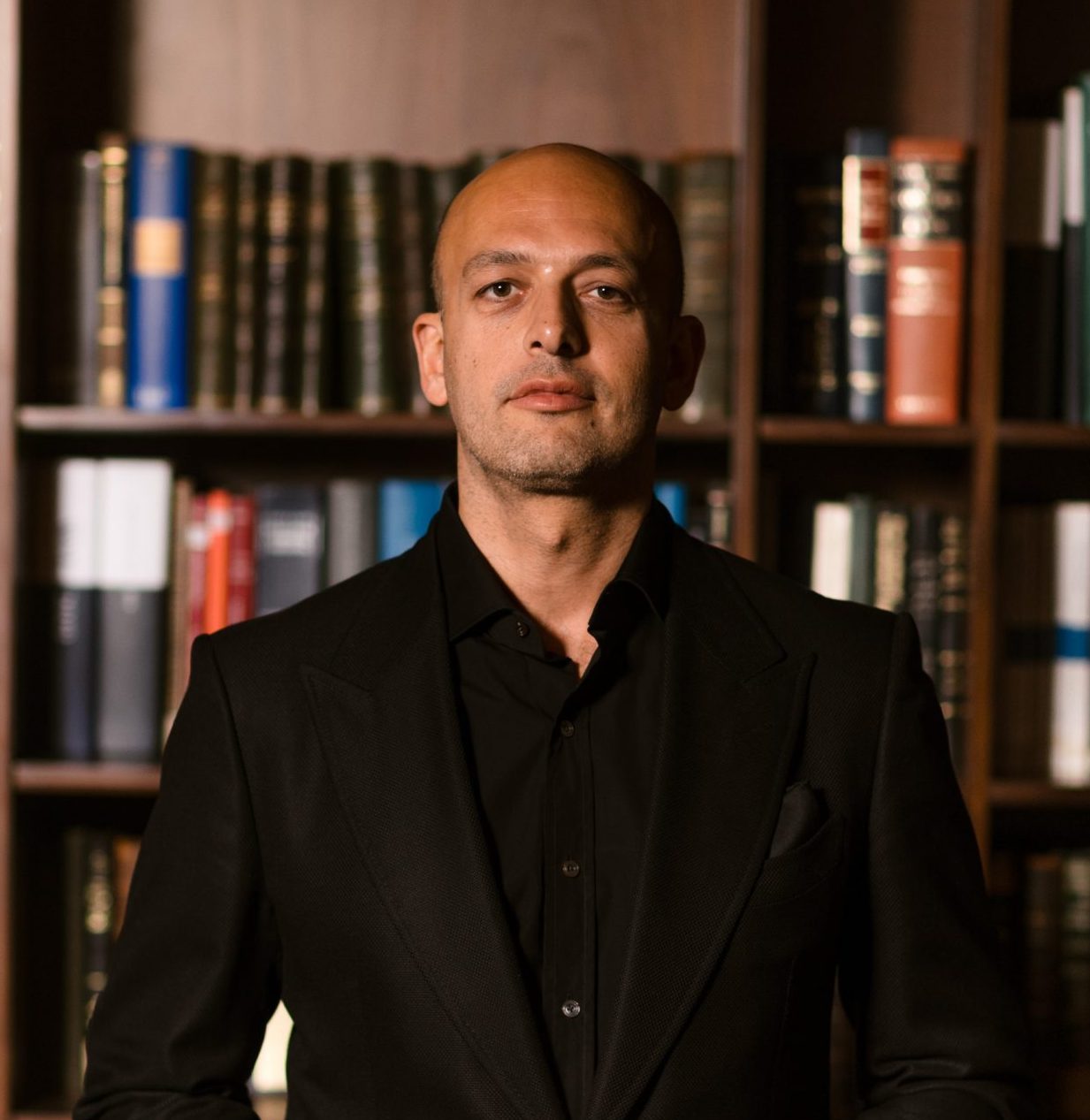
At Youssef + Partners, the Legal Expert Testimony practice supports counsel in defining scope, preparing, and presenting Arab and GCC law evidence. Dr. Karim A. Youssef has provided expert testimony on Middle Eastern and Arab law before international arbitral tribunals and courts. GAR has noted Youssef + Partners’ work as expert witness on regional law, including Kuwaiti law. The firm’s GAR profile is available through Global Arbitration Review.
Speak to Youssef + Partners
For counsel evaluating or instructing a MENA law expert witness, early input can help define the legal question, narrow the evidence, and avoid procedural gaps.
To discuss instructing Arab law expert international arbitration support, visit the firm’s Legal Expert Testimony practice, read Dr. Karim A. Youssef’s bio, or contact Youssef + Partners.
Sources
- UAE Civil Transactions Law
- DIFC Arbitration Law
- Saudi Basic Law of Governance
- IBA Rules on the Taking of Evidence in International Arbitration
- CIArb Guideline on Party-Appointed and Tribunal-Appointed Expert Witnesses
- DIFC Courts Rules — Part 31: Experts and Assessors
- GAR 100 — Youssef + Partners Profile